What She Wants Retirees to Know

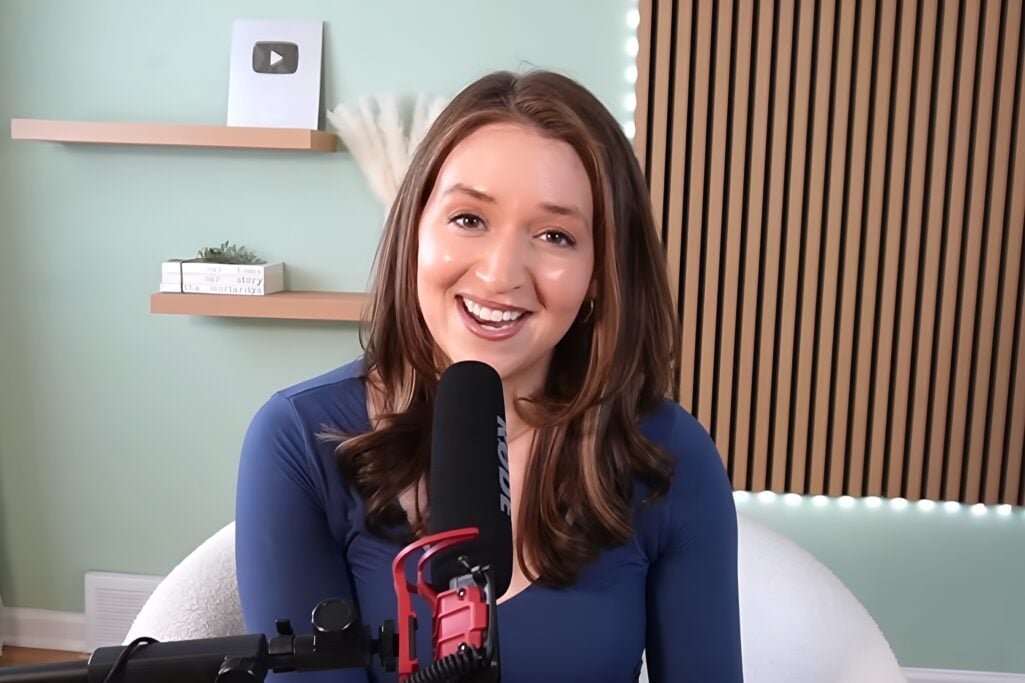
Erin Moriarity bought her first stock at 8 years old: Campbell Soup, because she liked the kids on the label. Disney came second. By the time she passed her CFP exam in 2016, she’d studied personal finance for decades.
Her YouTube channel, Erin Talks Money, has grown to more than 340,000 subscribers. The audience skews 55 and older: experienced DIY investors working through Social Security timing, withdrawal strategies, and the harder question of how to spend what they’ve built.
Erin joined Boldin CEO Steve Chen on the Boldin Your Money podcast to talk about what she’s learned, what she keeps returning to, and why financial independence has always felt personal to her.
What Is Erin Talks Money?
Erin Talks Money is a YouTube channel where Erin Moriarity covers Social Security strategies, retirement income planning, and the psychology of spending down savings, for an audience that’s mostly 55 and older.
She launched the channel six years ago, and it took more than a year and a half for her to monetize it. Erin quit twice, and her brother and husband talked her back both times. Her earliest videos barely got any views. Her brother, a physician, would walk hospital halls opening her videos on every computer he passed just to give her a view.
Erin has since built a thriving community. “My community is incredible,” she said. “DIYers. They’re very well researched themselves, they’re very informed. They impress me every single day.”
The questions in her comments run to Roth conversion timing, Social Security delay strategies, and how much to leave the kids. “My community is very financially literate,” she said. “This is not the people who are paycheck to paycheck.”
Erin has no Instagram page, no TikTok account, and no Telegram group. “I want to go live my life,” she said. YouTube is where she works, and comments and email are how she connects.
What Made Financial Independence Personal for Erin Talks Money?
Erin Moriarity’s drive for financial independence came from watching her mother pick the last savings bond out of the savings box when she was 7 years old. “I looked at her, I’m like, what do we do now? Like, how do we get groceries?” she recalled.
Her grandmother inspired her to invest. Born in 1927, raised during the Depression, married to a miner, she worked as a seamstress and built real wealth over a lifetime.
“The dining room was just always full of grandma’s papers,” Erin recalled. “Grandma’s papers were from the brokerage houses and like her stock certificates… we would just leaf through these and whenever it was time for the grandkids to eat we had to like shift off all of her papers and put them on the floor.”
Her grandmother had been investing since the 1950s. She taught Erin’s mother to save and handed Erin something sharper: the conviction that money is something you pay attention to.
Her father taught a different lesson. A dentist who held tight control over the family’s finances, he fired Erin’s mother after the divorce and stopped paying child support. Erin would go with her mother to collect workers’ compensation in person. She watched the savings bonds run out.
That period gave Erin a specific kind of clarity. “I saw my dad be very, very, very controlling over my mom, over myself, over my brother,” she said. “And it very much left this impression that I don’t want someone else to control my financial life.”
Why Erin Talks Money Keeps Coming Back to Social Security
Social Security timing is the most consequential financial decision most retirees make. Erin Moriarity believes most people approach it with far less strategy than it deserves.
She found her way to it through a book her father brought home, Get What’s Yours by Lawrence Kotlikoff. It was originally meant to help Erin’s mother maximize her benefits, but Erin read it herself.
What she found surprised her: a system far more complex than the SSA’s own materials suggest, full of claiming strategies, timing tradeoffs, and spousal decisions that most people never learn about.
“This system is fascinating,” she said, “and also a lot of people don’t seem to know a lot about it.” She saw the space between how much Social Security rewards preparation, and how little most people prepare.
Years later, it became her first YouTube video, and it’s still a topic she’s passionate about. Her 55-plus audience is making claiming decisions now, and the income floor Social Security builds shapes everything else in a retirement plan.
What does Erin Talks Money recommend for Social Security timing?
Delaying Social Security as long as you can cover the shortfall tends to produce the highest lifetime income for most retirees. Erin makes this case above all for married couples, where the surviving spouse keeps whichever benefit is larger.
Her core argument: delay builds the income floor. Claiming early shrinks it for life. She has little patience for the claim-early-and-invest argument. “Show me your 8% risk-free,” she tells people who make it. “Because the 8% is guaranteed.”
The delayed retirement credit also comes with inflation adjustment.
Should you worry about the Social Security trust fund running out?
The 2032 trust fund depletion date means a potential benefit reduction, not a program shutdown. Erin Moriarity thinks Congress will act before it gets there, just as it did in 1983.
She’s watched fear push people to claim at 62, locking in a reduced base before anything has changed.
“I think they’ll wait till the last minute,” she said, “but they’ll do something. It’s not going to run dry.” In 1983, lawmakers struck a deal just weeks before the deadline. She thinks the political cost of letting benefits fall for tens of millions of voters will force action again.
Erin Talks Money Makes the Case for an Income Floor First, Portfolio Second
Erin Moriarity’s retirement income strategy starts from one principle: cover your essential expenses with guaranteed income before you draw from your portfolio.
“There’s really only a handful of ways to fund a retirement,” she said. A pension if you have one. Social Security, timed to maximize the monthly benefit. An annuity if you want to build a pension-like income without one. Part-time work to make up the difference. A portfolio withdrawal strategy once the floor is set.
The order matters. Getting the guaranteed income sources right gives the portfolio a different job to do. Building the floor means:
- Delaying Social Security as long as you can
- Entering retirement with as little debt as possible, so essential expenses stay low
- Using pension income or an annuity to cover what Social Security doesn’t
- Making sure guaranteed income covers the basics before the portfolio gets touched
“I like the idea of having as many of your essential expenses covered by guaranteed income streams,” she said.
The distinction matters in concrete terms.
“If the market does well and you look at it and you say, ’Hey, we can take three vacations this year,’ as opposed to no vacations, that’s a much easier position to be in,” she said.
The other scenario is the one she wants her audience to avoid. “If the market performance is deciding whether or not I can pay my property tax,” she said, “that’s a very vulnerable position for me.”
Her personal preference is, “Home paid off, car paid off, no credit card debt, no outstanding debt. So my expenses are as low as essential.” After that, the portfolio becomes a source of choice.
Does Erin Talks Money recommend annuities in retirement?
Erin sees annuities as one way to build a guaranteed income floor. “If you want to make your own pension with an annuity because that brings you a sense of security, great,” she said.
It’s not a blanket recommendation. At 38, she holds the view loosely and expects it to change. “Ask me when I’m 65,” she added.
For retirees without pension income who want their essential expenses covered by something that doesn’t depend on markets, an annuity can fill that role.
What’s the difference between a bucketing strategy and a balanced portfolio withdrawal approach?
A bucketing strategy holds a cash or short-term reserve, insulating it from market swings. A balanced portfolio approach accepts more volatility in exchange for a potentially higher long-term withdrawal rate. Erin doesn’t favor one over the other.
“Do you want more of a bucketing approach so you have this cash buffer set aside that’s really insulated from market volatility,” she asks, “or are you okay with having a more balanced portfolio that is more exposed to volatility and having a lesser withdrawal rate on the total portfolio?”
Her answer: either can work. “I don’t really think there’s a wrong way to approach retirement,” she remarked. “I think it’s about aligning it with your risk tolerance, with your perspective.” Self-knowledge about how you respond to drawdowns matters more than the choice of strategy.
Most people don’t find out which approach fits their risk tolerance until a bad year tests it. The Boldin Planner lets you model your income floor, compare Social Security claiming ages, and stress-test your plan against a decade of poor returns, so you can see what holds before you’re depending on it.
What Erin Talks Money Says About Going DIY vs. Hiring a CFP
Erin Moriarity thinks most people don’t need a financial advisor while they’re building wealth. Her baseline is simple. “You don’t need a financial advisor,” she notes. “You don’t need someone telling you how to create the optimal portfolio. What you need is to just put money away.” She also has a caveat most people miss. “You don’t want to just hand everything over to a CFP,” she said. “You want to be actively involved in that.” Whoever you work with, the goal is to understand the plan well enough to own it.
DIY retirement planning works well when:
- Your savings are still in the accumulation phase and your financial life is straightforward
- You have one job, a standard account structure, and no major estate or tax complexity
- You understand your allocation and can stay the course through a bad market year
A CFP adds real value when:
- You’re navigating multiple marriages, blended families, or stepchildren
- You’re making large Roth conversion decisions or managing significant traditional IRA balances
- You own a business or carry estate complexity that intersects with your retirement
- You’re in your 70s and want a professional in your corner before cognitive decline can become a financial risk
That last point moved her the most. Her father developed vascular dementia. His second marriage ended partly because his wife didn’t want to take on his care. By the time Erin saw what was happening, she had no standing to step in. He fell into a Ponzi scheme, and moved a substantial portion of his assets into gold. He also bought an annuity without grasping the terms.
“Money is kind of the first place it shows up,” she said of cognitive decline. “If he had been working with a CFP,” she said of her father, “there would have been a lot less blowback.”
Why Erin Talks Money Keeps Coming Back to the Hardest Part of Retirement
The hardest part of retirement, for Erin Moriarity, isn’t building the money. It’s spending it.
“We spend 30, 40 years accumulating wealth,” she said, “and then people enter into retirement and they’re so afraid to spend it.”
The fear isn’t abstract. “They’re so afraid that what they’ve worked these three or four decades for is ultimately going to run out and it would run out at the worst possible time, right?” she said. “When you’re 80 or 90 and you can’t go back to work at that point.”
That fear persists even when the numbers look solid. It doesn’t dissolve when the income floor is in place, or go away when the balance crosses a threshold.
Part of what she’s trying to do is close that distance. “What’s most interesting for my audience and for me,” she said, “is to maybe nudge people to spend what they’ve worked so hard for safely.”
She read Die with Zero by Bill Perkins, and has mixed feelings. “I love it on the one hand,” she said. “This idea that you should spend everything you’ve worked so hard for. I’m fully on board with that message.” The literal advice to take on debt in your 20s to fund your lifestyle is where she parts ways. “I don’t want debt. I don’t want to owe anybody anything.”
What she wants for her audience is to reach retirement with obligations cleared, essential expenses covered by guaranteed income, and a plan they’ve stress-tested. The goal is to reach a point where spending is a decision you can make rather than a risk you’re afraid to take. After that, the portfolio is yours to spend.
Frequently Asked Questions About Erin Talks Money
Erin Moriarity is the creator of the Erin Talks Money YouTube channel, where she covers Social Security strategies, retirement income planning, and the psychology of spending down savings for investors who are mostly 55 and older. She holds a master’s in personal finance and passed the CFP exam in 2016. Her channel has more than 340,000 subscribers.
The Erin Talks Money channel covers Social Security timing, retirement income floor construction, withdrawal strategies including bucketing and balanced portfolio approaches, and the emotional challenge of spending what you’ve saved. Erin Moriarity also addresses when to hire a CFP, how to think about annuities in retirement, and what the Social Security trust fund situation actually means for people planning retirement now.
Delaying Social Security for as long as you can fund the gap tends to produce the highest lifetime income for most retirees. The delayed retirement credit is guaranteed and adjusts for inflation. That makes the claim-early-and-invest argument hard to sustain in most cases. For married couples, the case for delay is stronger still: the surviving spouse collects whichever benefit is larger, so delay on the higher earner’s benefit protects against a long widowhood.
A financial advisor adds limited value when a financial life is straightforward: consistent savings, a simple account structure, no major estate or tax complexity. The case for a CFP grows when life gets complicated. Erin Moriarity also makes the case for having a professional in your corner by your 70s, when cognitive decline can become a financial risk before anyone realizes it’s happening.
The foundation of retirement spending is a high income floor. This means Social Security delayed as long as feasible, minimal debt entering retirement, and essential expenses covered by guaranteed income streams. With those covered, the portfolio becomes a source of choice rather than a lifeline. That shift is what makes spending feel safe rather than reckless, and it’s the piece most retirees find hardest to build without seeing their full plan laid out in front of them.