Five years after GameStop mania, retail investors are reshaping markets

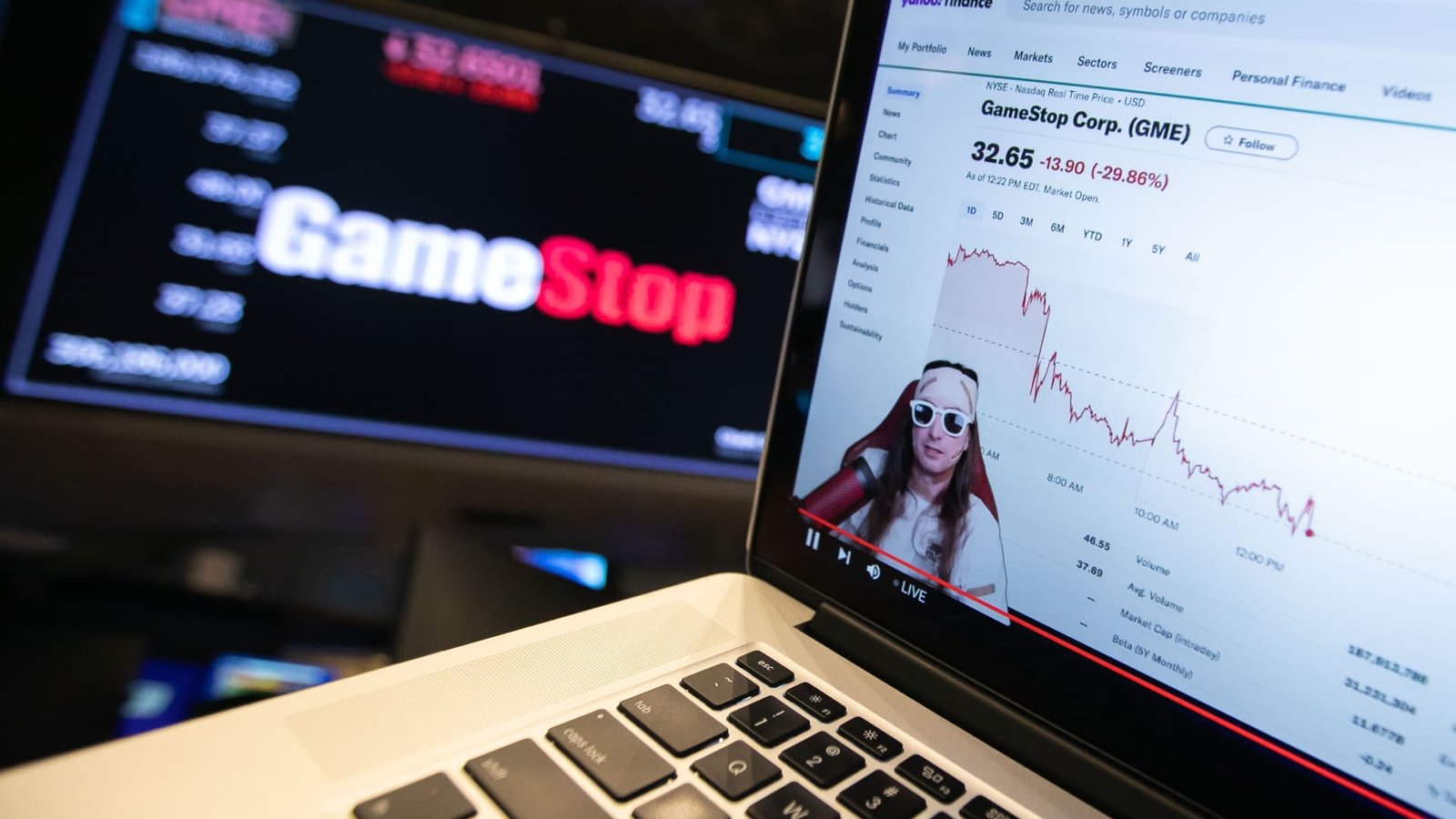
Keith Gill, a Reddit user credited with inspiring GameStop’s rally, during a YouTube livestream arranged on a laptop at the New York Stock Exchange on June 7, 2024.
Michael Nagle | Bloomberg | Getty Images
Five years after a band of online traders sent GameStop skyrocketing and upended Wall Street’s assumptions about “dumb money,” the influence of retail investors has proven more durable and long-lasting than many expected.
What began as a dramatic short squeeze in early 2021 has evolved into a persistent force in equity markets, reshaping trading dynamics, pushing hedge funds to adapt and providing a steady source of dip-buying flows of cash that helped underpin one of the longest bull markets on record.
“Retail investors were always signals to me,” said Tom Lee, head of research at Fundstrat, whose flagship exchange-traded fund exceeds $4 billion in assets. “When they were buying dips, the bull market was healthy. From 2009 to 2020, institutions acted like retail didn’t exist. That changed completely after 2020. Retail investors are difference-makers. They can move markets with size and conviction.”
Before the pandemic, retail trading accounted for only a small fraction of daily equity volumes in the U.S. That changed as lockdown-era government stimulus payments, zero-commission trading and social media-fueled coordination pulled millions of new investors into markets.
“A lot of people assumed that once Covid cleared and everyone went back to their daily lives, retail participation would fall off,” said Steve Quirk, chief brokerage officer at Robinhood Markets. “What surprised me a little is just how strong it’s been.”
On average, individual investor participation in U.S. equities has risen to nearly 20% of daily trading volume, up from low single digits before Covid, according to Jeff Shen, co-chief investment officer and co-head of systematic active equities at BlackRock.
“There is certainly a social aspect of it that is quite foreign to a classic hedge fund where there’s a lot of independence,” Shen said. “The social aspect makes this type of flow very correlated” among varying types of Main Street investor.
Quirk noted that on high-volume days, retail participation in equities could shoot up to close to 40% and, on the options side, as high as 50% of volume.
During the meme stock frenzy, traders flocked to online forums such as Reddit’s WallStreetBets, where ideas spread at a rapid pace and unprecedented scale. Figures like Keith Gill, known online as Roaring Kitty, emerged as focal points for a loosely coordinated community that shared research, trading strategies and a deep skepticism of Wall Street orthodoxy. The GameStop saga also left a mark on popular culture, inspiring the 2023 film “Dumb Money,” starring Paul Dano and Seth Rogen.
A scene from the trailer for the film “Dumb Money” starring Paul Dano.
Courtesy: Sony Pictures Entertainment
Far from being wiped out after the meme-stock boom faded, retail investors have continued to deploy…